The lecture about ‘The global trade in wildlife and its impacts’ was given by Stuart Marsden, who is a Professor of Conservation Ecology at Manchester Metropolitan University. He gave us an overview of direct animal exploitation, the sustainability of global trade in wildlife and his most recent work about Asian Songbirds crisis.
Direct animal exploitation
The direct animal exploitation is a scientific way to describe how the wildlife is directly affected by human activities. It usually includes:
• Hunting
• Trapping
• Harvesting
• Poaching
• Culling
The animal exploitation is always important for human being, since animals are wildly used as direct food sources, used for medical experimentation, variety of commercial uses in global trading and even for entertainments like trophy hunting.
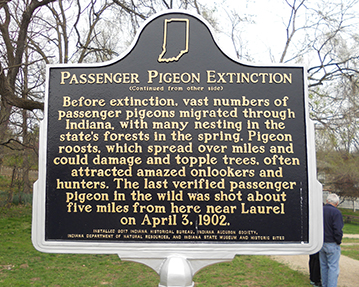
However, it will also cause serious ecological problems, for example, the over-exploitation like large scale harvesting will damage the food chain and the local ecosystem. For instant, the extinction of the endemic species in North America named passenger pigeons is one of the most well-known tragedy that mainly caused by massive scale of hunting for cheap food sources in 19th century.
‘Sustainability’ – The key for global trade in wildlife
There are always debates about global trade of wildlife and direct animal exploitation, while correct answer on whether it is right or wrong is never given by the public. Because the global trade in wildlife and animal exploitation are both big topics.
They could bring benefits to the society, for example, the laboratories bought animals for medical experiments might save millions of lives. Also, they could give rise to negative impacts to biodiversity and ecosystem, such as the illegal poaching of rare animals for money.
Therefore, the International Union for Conservation of Nature (IUCN) suggested a sustainable attitude to treat the global trade of wildlife and direct animal exploitation.
For instant, the people who gain profits from global trade of wildlife should also contribute to the conservation programmes. Moreover, keep the direct animal exploitation cause minimum influences on the species and allow those species to recover in population before next harvesting.
The Asian Songbird Crisis
The most recent work on the Asian Songbird Crisis by Professor Stuart Marsden is an example that shows sustainability in wildlife trading is necessary for conservation.
The crisis is mainly caused by the tradition about keeping Songbirds as pets in Java, and the unsustainable trade of Asian Songbird is threating this species and leading it to become extinct.
However, the culture and special tradition in Java areas made the conservation work a big challenge.
Personal Thoughts
It is interesting to see how the conservation works are carried out and the possible problems and challenges a conservatist might have. Although animal conservation might not be a career path for me, it is still worth to think about and contribute to the conservation works in daily life.
‘Tainted love’ The Asian Songbird Crisis.
 Yicheng Jin's Blog