Richard Buggs from Royal Botanic Garden gave us a speech about ‘Genomics for future trees’, and he talked about his research on board-leaved trees, threats to ash trees, ash genome sequences, the candidate genes for pest and pathogens resistances and approaches of between species or within species comparisons he used.
Why do genomics for broad-leaved trees?
- Increasing threats (climate change, pest and pathogen being spread around the world, squirrel damage, deer browsing, fragmentation)
- Increasing uses around the world (UK is one of the biggest woods import country)
- Genomes are easier to work on (E.g. Ash tree genome is around 0.9 million base pair in length, but wheat genome is around 17 million base pair in length)
Example of major ash tree diseases
• Ash dieback
- Serious diseases caused by fungus Hymenoscyphus
- Has symptoms like leaf loss and crown dieback
- 10 or 12 years of exposure will cause the death of ash trees
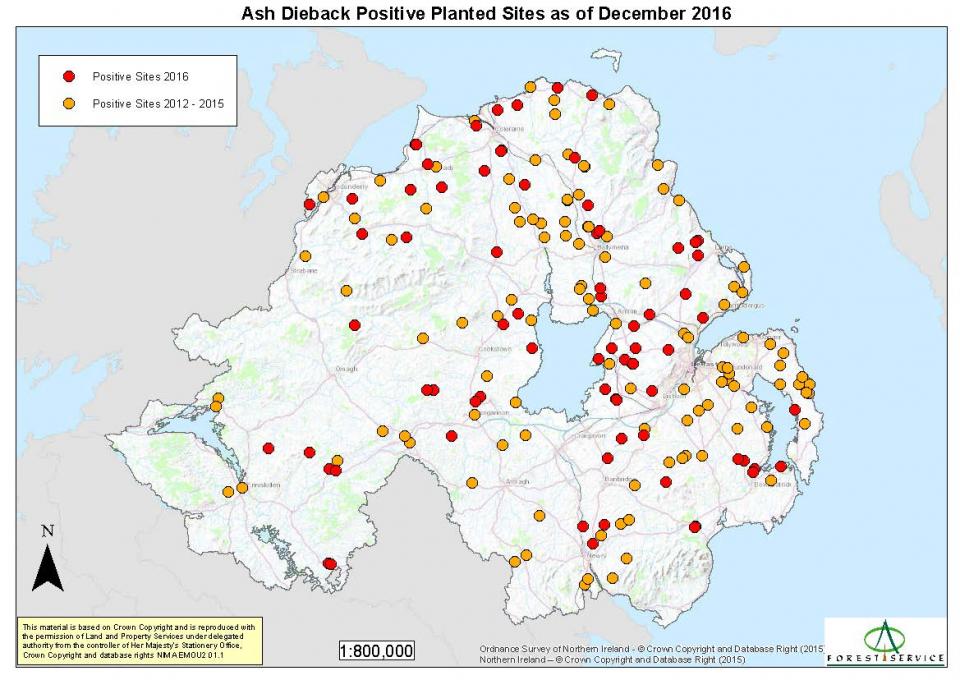
https://www.daera-ni.gov.uk/articles/ash-dieback
• Emerald Ash Borer
- Most common ash tree diseases
- Caused by invasive wood-boring beetle named emerald ash borer
- Cause xylem tissue damage (nutrient carrying vessels)
- Wildly spread in US
Methods to treat ash tree diseases
- Leave it to natural selection
- Breed native tolerant trees
- Accelerated breeding using genomic information to select trees at very early stage
- SIS or trans genetics (moving genetic material between different species of Ash or different plants)
- Crosses between native ash trees and foreign ash trees to co-evolve with ash dieback and emerald ash borer
Therefore, the studying of broad-leaved trees’ genomes plays a significant role in saving diseases infected ash trees.
Even the genetic modified ash trees are not accepted in some areas due to several social or ethical reasons, the study of genetic markers of ash trees could be useful to promote the natural selection process to against the diseases. Because the genetic marker could help to predict the survivability of infected ash trees, and only the trees that can not survive will be cut down.
Ash genome sequencing and candidate genes for pest and pathogens resistances
Richard Buggs and his research team contributed a lot to the ash tree genome sequencing, and with collaborators and national tree health security, twenty-eight different ash species are sequenced.
Furthermore, within each biogenetic clade of the genus, extra sequencing on one or two ash tree species were done.
Also, several candidate genes in his research has shown the potential to resistant to ash tree diseases after genetic engineering.
Personal thoughts
As a student in biology with biotechnology course, it is interesting to see how approaches in biotechnology and genomics could be applied to forestry study.
It seems the research work in biology could be really complicated and time consuming and might not be accepted by the public when it comes to the genetic modified species. So, I need to be more cautious about my career choices after the graduation and try to know more biology related job options.
Short video about Ash Dieback
 Yicheng Jin's Blog